

Erectile Dysfunction Treatment in Secunderabad

What is Erectile Dysfunction?
Erectile dysfunction, or ED, is the most common sex problem that men report to their doctor. It affects as many as 30 million men.
ED is defined as trouble getting or keeping an erection that's firm enough for sex.
Though it's not rare for a man to have some problems with erections from time to time, ED that is progressive or happens routinely with sex is not normal, and it should be treated.
ED can happen:
- Most often when blood flow in the penis is limited or nerves are harmed
- With stress or emotional reasons
- As an early warning of a more serious illness, like atherosclerosis (hardening or blocked arteries), heart disease, high blood pressure, or high blood sugar from Diabetes
Finding the cause(s) of your ED will help treat the problem and help with your overall well-being. As a rule, what's good for your heart health is good for your sex health.
How Erections Work
During sexual arousal, nerves release chemicals that increase blood flow into the penis. Blood flows into two erection chambers in the penis, made of spongy muscle tissue (the corpus cavernosum). The corpus cavernosum chambers are not hollow.
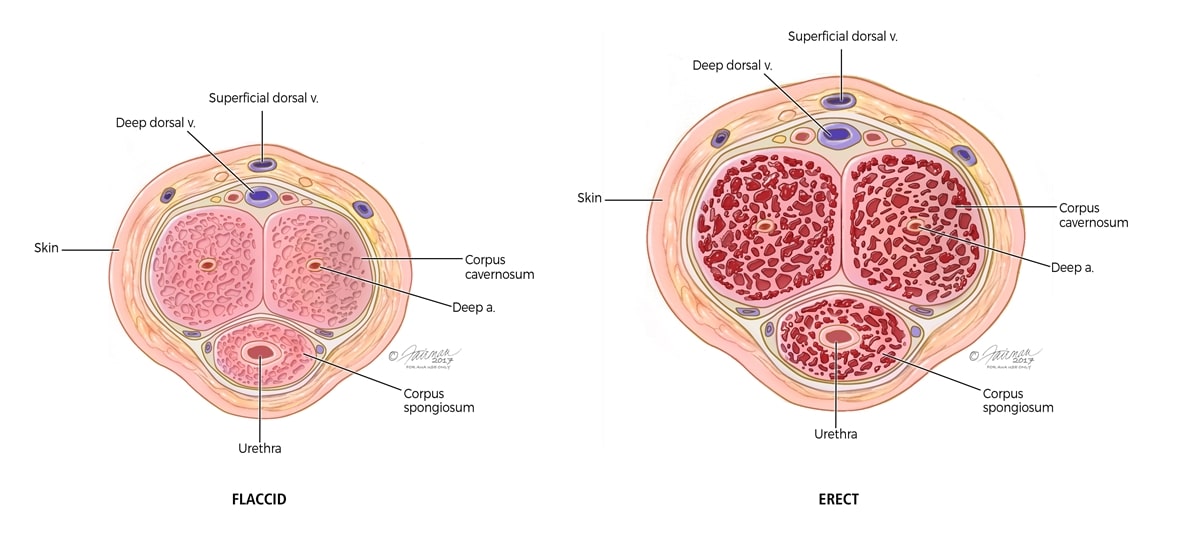
During an erection, the spongy tissues relax and trap blood. The blood pressure in the chambers makes the penis firm, causing an erection. When a man has an orgasm, the second set of nerve signals reach the penis and cause the muscular tissues in the penis to contract and blood is released back into a man's circulation and the erection comes down.
When you are not sexually aroused, the penis is soft and limp. Men may notice that the size of the penis varies with warmth, cold, or worry; this is normal and reflects the balance of blood coming into and leaving the penis.
Symptoms
With Erectile Dysfunction (ED), it is hard to get or keep an erection that is firm enough for sex. When ED becomes a routine and bothersome problem, your primary care provider or a Urologist can help.
ED may be a major warning sign of cardiovascular disease indicating blockages are building in a man's vascular system. Some studies have shown men with ED are at significant risk of getting a heart attack, stroke, or circulatory problems in the legs. ED also causes:
- Low self-esteem
- Depression
- Distress for the man and his partner
If ED is affecting a man's well-being or his relationships, it should be treated. Treatment aims to fix or enhance erectile function, help circulatory health and help the quality of a man's life.
Causes
ED can result from health problems, emotional issues, or from both. Some known risk factors are:
- Being over age 50
- Having high blood sugar (Diabetes)
- Having high blood pressure
- Having cardiovascular disease
- Having high cholesterol
- Smoking
- Using drugs or drinking too much alcohol
- Being obese
- Lacking exercise
Even though ED becomes more common as men age, growing old is not always going to cause ED. Some men stay sexually functional into their 80s. ED can be an early sign of a more serious health problem. Finding and treating the reason for ED is a vital first step.
Physical Causes of ED
ED happens when:
- There is not enough blood flows into the penis
Many health issues can reduce blood flow into the penis, such as hardened arteries, heart disease, high blood sugar (diabetes), and smoking. - The penis cannot trap blood during an erection
If blood does not stay in the penis, a man cannot keep an erection. This issue can happen at any age. - Nerve signals from the brain or spinal cord do not reach the penis
Certain diseases, injury or surgery in the pelvic area can harm nerves to the penis. - Diabetes can cause small vessel disease or nerve damage to the penis
- Cancer treatments near the pelvis can affect the penis' functionality
Surgery and or radiation for cancers in the lower abdomen or pelvis can cause ED. Treating prostate, colon-rectal or bladder cancer often leaves men with ED. Cancer survivors should see a Urologist for sexual health concerns. - Drugs used to treat other health problems can negatively impact erections
Patients should talk about drug side effects with their primary care doctors.
Emotional Causes of ED
Normal sex needs the mind and body working together. Emotional or relationship problems can cause or worsen ED.
Some emotional issues that can cause ED are:
- Depression
- Anxiety
- Relationship conflicts
- Stress at home or work
- Stress from social, cultural, or religious conflicts
- Worry about sex performance
Diagnosis
Finding the cause of your ED will help direct your treatment options.
Diagnosing ED starts with your health care provider asking questions about your heart and vascular health and your erection problem. Your provider may also give you a physical exam, order lab tests, or refer you to a Urologist.
ED Treatments
Non-invasive treatments are often tried first. Most of the best-known treatments for ED work well and are safe. Still, it helps to ask your health care provider about side effects that could result from each option:
- Oral drugs or pills known as phosphodiesterase type-5 inhibitors are most often prescribed in the U.S. for ED (Viagra, Cialis, Levitra, Stendra)
- Testosterone Therapy (when low testosterone is detected in blood testing)
- Penile Injections (ICI, intracavernosal Alprostadil)
- Intraurethral medication (IU, Alprostadil)
- Vacuum Erection Devices
- Penile Implants
- Surgery to bypass penile artery damage for some younger men with a history of severe pelvic trauma. Penile vascular surgery is not recommended for older men with hardened arteries.

